
Solutions
People learn together on a shared rhythm, and we notice when someone stops.
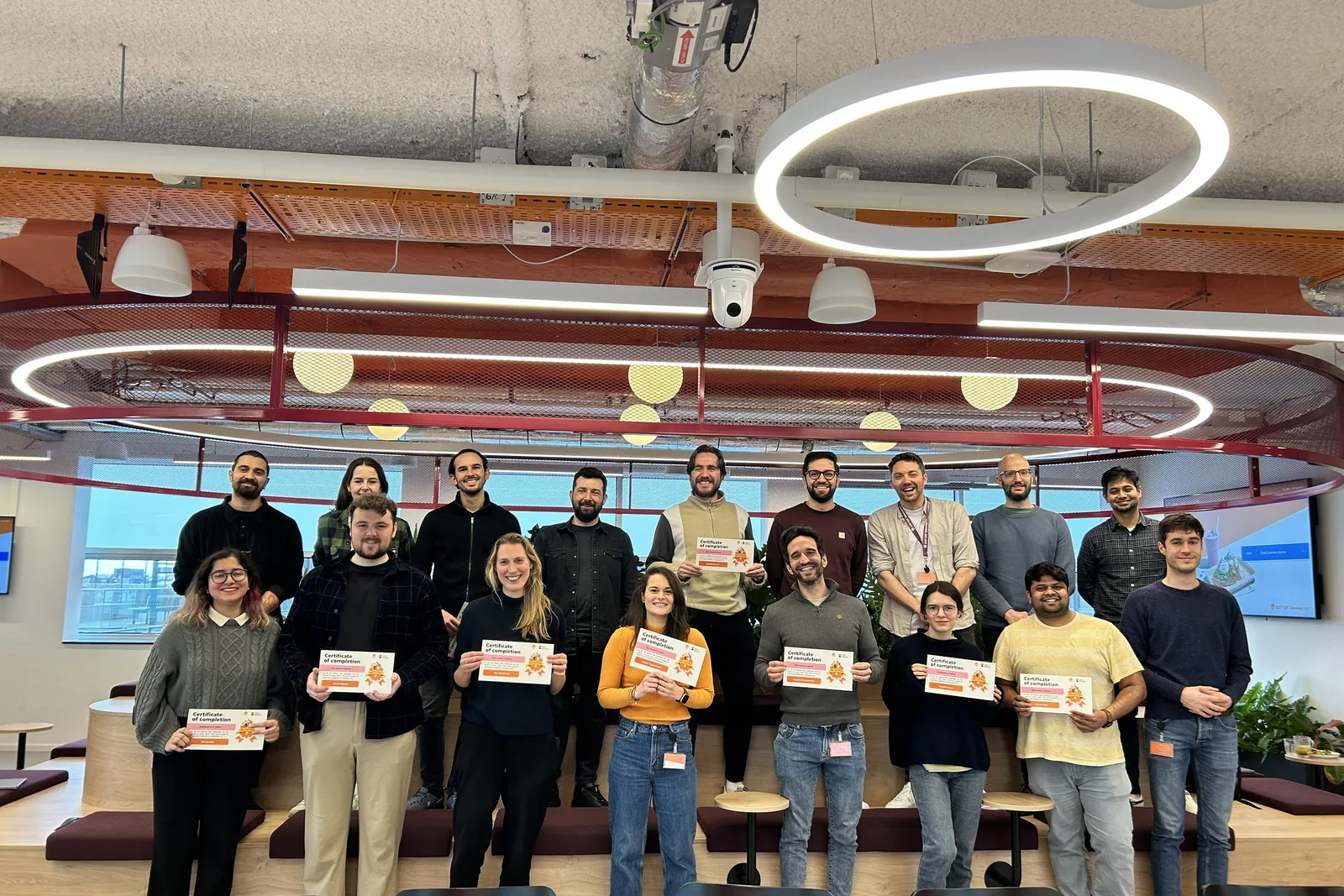
Self-paced learning sounds generous. In practice everyone starts, few finish, and nobody notices who stopped in week three. Cohorts and active follow-up fix both.
We group learners into cohorts with a shared start date, a shared pace and a shared finish, and we run the operation: composing the groups, planning, communication and the channel where people ask each other things.
A typical cohort runs twelve weeks: a kick-off and onboarding in week one, course blocks with Live Booster sessions in between, weeks set aside for applying it to real work, and a graduation session with certificates at the end. Cohorts are usually split by persona or department, because customer service and finance don't need the same examples.
Our Data & AI Adoption Specialists follow every learner and step in when someone stalls, with reminders, input for managers and reports per team. Prefer we don't contact learners directly? Then we work through your managers.
80% completed the mandatory track within four months
At PGGM, through a kick-off, cohorts in Teams, manager 1-on-1s and active nudging, with progress monitored up to ExCo level. At Jaarbeurs, 96% course completion across 350 learners in four persona profiles.


Member of

Nominated


